Getting visitors to your Shopify store is only half the job. If those visitors leave without buying, your ad spend and your SEO work are wasted. That is where Shopify conversion rate optimisation in Australia comes in. This guide shows you how to find where shoppers drop off, what to fix first on your product pages and checkout, and how to test changes without guessing.
What conversion rate optimisation means for a Shopify store
Your conversion rate is the share of sessions that end in an order. Conversion rate optimisation, often shortened to CRO, is the work of making it easier for the right visitors to buy. It is not about tricks or pressure. It is about removing friction, answering questions before they are asked and building trust.
Small improvements add up. If more of your existing visitors buy, every dollar you spend on Google Ads, Meta Ads or SEO works harder. You grow revenue without needing more traffic.
Start with your numbers
Before you change anything, look at what is actually happening. Shopify Analytics shows your sessions, add to cart rate, checkout rate and conversion rate. Google Analytics 4 can add more detail on where visitors come from and which pages they leave on.
- Sessions to add to cart: a low rate usually points to product page problems
- Add to cart to checkout: drop off here often comes from shipping costs or a confusing cart
- Checkout to order: problems here are often payment options, surprise fees or trust
- Device split: compare mobile and desktop, because most Australian shoppers browse on their phones
Find the biggest drop and fix that first. It is the fastest way to see a result.
Fix your product pages
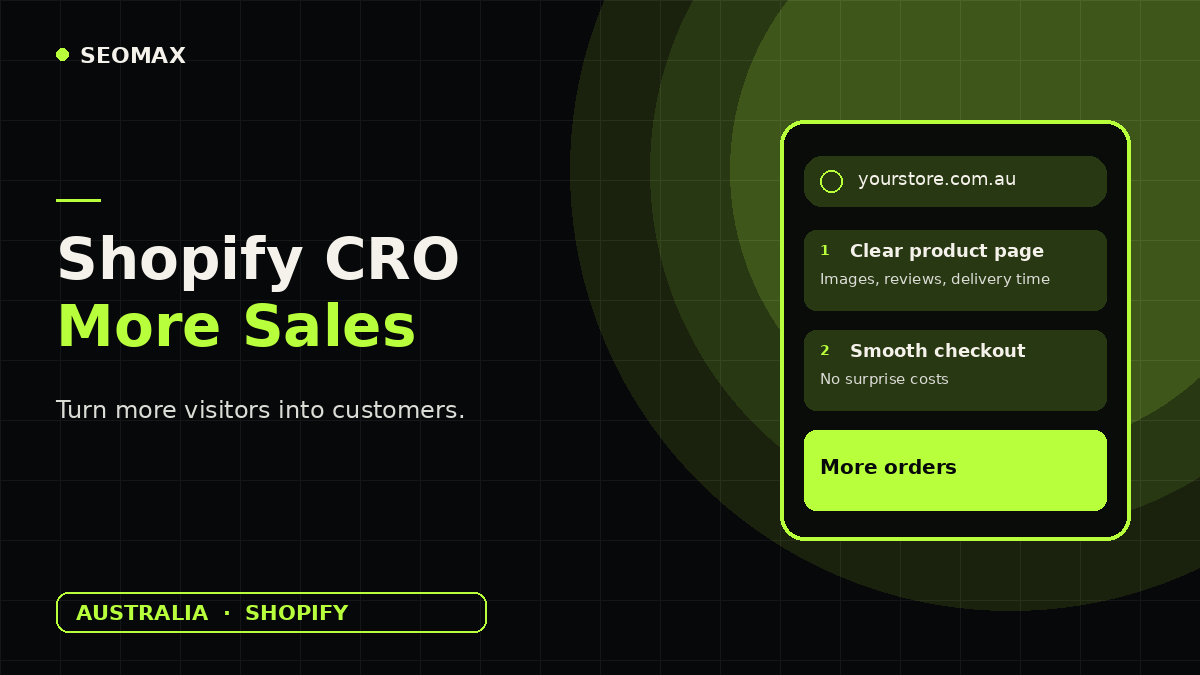
1. Use clear, honest images
Shoppers cannot touch the product, so your images do the selling. Show the product from several angles, in use and at its real size. Make sure images load fast on mobile. Never show features the product does not have. That only leads to returns and complaints.
2. Write descriptions that answer questions
Lead with the main benefit, then cover the details people ask about. Think size, materials, compatibility, what is in the box and how to use it. Short paragraphs and simple bullet points are easier to scan on a phone than a long block of text.
3. Make the price and delivery clear
Show the price, any sale price and the expected delivery time near the add to cart button. Australian shoppers want to know when an order will arrive, especially for regional addresses. Be honest about delivery times. A clear promise you keep beats a fast promise you miss.
4. Add social proof
Product reviews, ratings and customer photos help new visitors trust you. Ask happy customers for a review after delivery. Display real reviews only. The ACCC has clear guidance on online reviews, and fake or cherry picked reviews can breach Australian Consumer Law.
5. Keep the add to cart button visible
On mobile, a sticky add to cart bar helps shoppers buy without scrolling back up. Use one main button with a clear label. Too many buttons and pop ups compete for attention and slow people down.
Remove friction from cart and checkout
Shopify checkout is already fast and trusted, so most of the work happens around it. Focus on these areas.
- No surprise costs: show shipping costs or a free shipping threshold early, not for the first time at checkout
- Payment options Australians use: Shop Pay, Apple Pay, Google Pay and PayPal, plus buy now pay later options such as Afterpay if they suit your products
- Guest checkout: do not force people to create an account before they buy
- Clear policies: link your shipping, returns and refund policies in the footer and near the cart
- Contact details: a phone number, email or chat option tells shoppers a real business is behind the store
Remember that your refund and returns policy must line up with Australian Consumer Law. The ACCC explains your obligations on repairs, replacements and refunds.
Speed matters on mobile
A slow store loses buyers before they even see your products. Keep your theme lean and remove apps you no longer use, since each one can add scripts. Compress images and avoid large autoplay videos on your home page. Test your key pages with Google's PageSpeed Insights and fix the biggest issues it reports.
Win back shoppers who leave
Most visitors will not buy on their first visit. That is normal. What matters is how you follow up.
- Abandoned cart emails: send a friendly reminder within a few hours, then a second one the next day
- Browse abandonment: remind people about products they viewed but did not add to cart
- Welcome series: turn new subscribers into first time buyers with a short, helpful sequence
- SMS: use it for timely reminders, with clear consent and an easy opt out
Our guides to email marketing for small business and SMS marketing for small business cover these flows in more detail, including the consent rules under the Spam Act.
Test changes instead of guessing
Change one thing at a time and give it enough traffic to tell you something. A new product page layout, a different headline or a clearer shipping message can all be tested. Keep a simple log of what you changed, when you changed it and what happened to add to cart and conversion rates.
If your store has low traffic, focus on the obvious fixes first. Clear images, honest delivery times, visible reviews and no surprise costs help almost every store.
A simple Shopify CRO checklist
- Check your conversion funnel in Shopify Analytics
- Find the step with the biggest drop off
- Improve product images and descriptions on your best sellers
- Show price, shipping and delivery time near the add to cart button
- Add real customer reviews
- Offer the payment methods Australians expect
- Remove unused apps and speed up mobile pages
- Set up abandoned cart and welcome emails
- Test one change at a time and track the result
How SEOMAX can help
SEOMAX is an official Shopify Partner and an official Omnisend Partner. We help Australian online stores with Shopify design and conversion improvements, Google Ads and email and SMS customer journeys. We look at where your shoppers drop off and fix what matters most first.
Frequently asked questions
What is a good conversion rate for a Shopify store?
It depends on your products, prices and traffic sources. Rather than chasing an industry average, compare your store with its own past results and focus on improving the step in your funnel with the biggest drop off.
What should I fix first to improve Shopify conversions?
Start with your best selling product pages and your cart. Clear images, honest delivery times, visible reviews and no surprise shipping costs usually give the fastest improvement.
Does site speed affect Shopify sales?
Yes. Slow pages frustrate mobile shoppers and many leave before the page loads. Removing unused apps, compressing images and keeping your theme lean all help.
Do abandoned cart emails really work?
They are one of the most useful flows for most online stores. A friendly reminder sent soon after someone leaves can bring back shoppers who were simply distracted.
Should I offer buy now pay later in my Australian store?
It can help for higher priced products, because many Australian shoppers like to spread payments. Check the fees and test whether it lifts conversions for your store.
Can SEOMAX audit my Shopify store?
Yes. We can review your store, find where shoppers drop off and show you what to fix first. Request a free audit to get started.
Get a free Shopify audit
Want more of your visitors to become customers? We will review your Shopify store for free and show you the changes most likely to lift sales, with no obligation. Request your free audit or call 03 8400 0295.